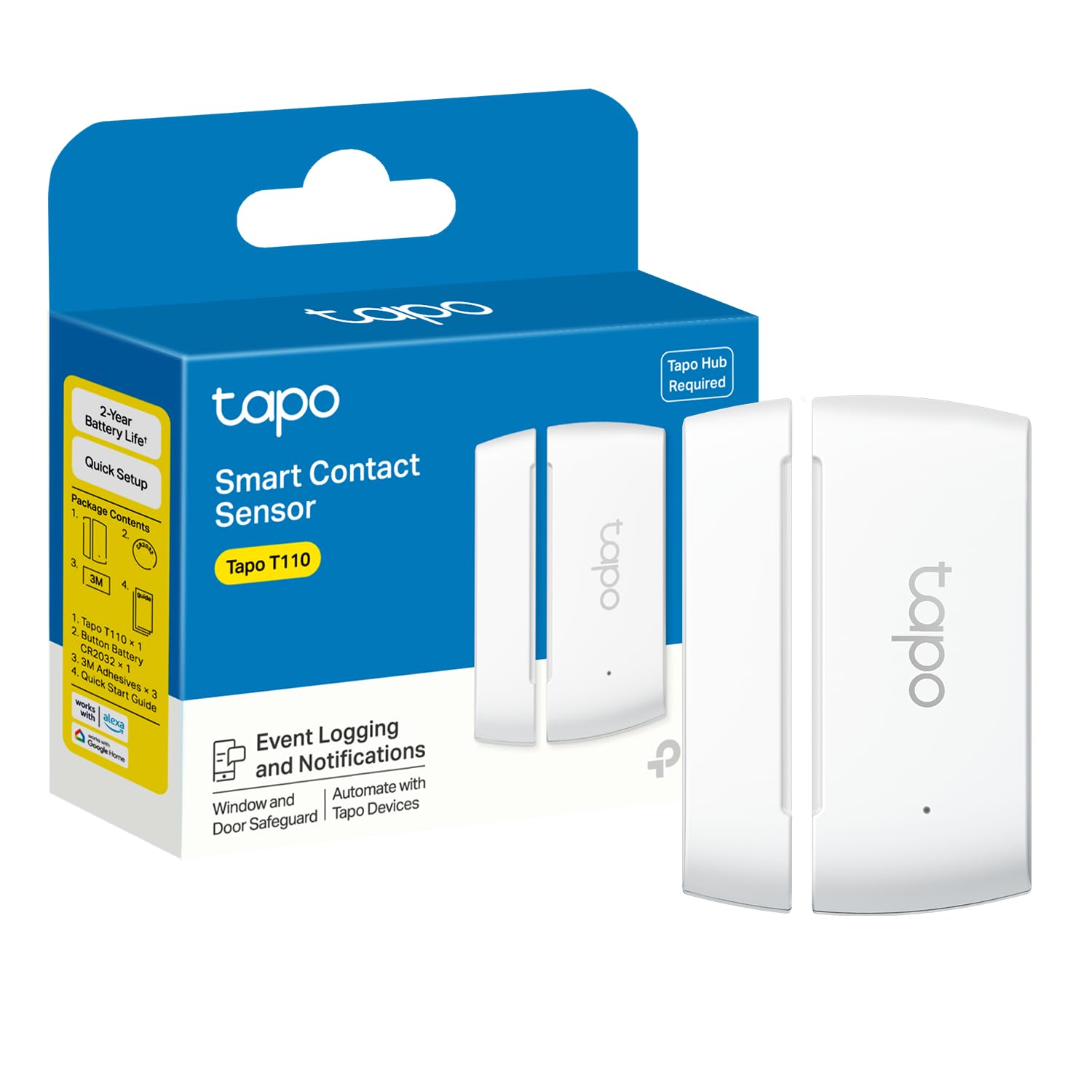
The Tapo Door Sensor Mini is a compact contact sensor for tracking when a door, window, cabinet, or other hinged item opens and closes.
This Tapo Door Sensor Mini review focuses on its hub requirement, flexible placement, and usefulness in a Tapo smart home.
Tapo T110 Sensor Review Summary
The quick verdict
700+ ratings
Read Amazon ReviewsTapo T110 Door Sensor Mini
A practical fit for Tapo households that want simple open-and-close alerts and automations, provided they already have or plan to add a compatible hub.
- Requires a Tapo Hub H100, sold separately, and a secured 2.4 GHz Wi-Fi network for the hub.
- Communicates with the hub using a Sub-1G low-power wireless protocol.
- Allows a contact gap of up to 15 mm.
- Monitors doors, windows, cabinets, fridges, mailboxes, and other openable items.

Pros
- Can cover more than entry doors, including cabinets, fridges, and mailboxes.
- Provides phone alerts and can trigger Tapo Smart Actions.
Consider before buying
- Requires a Tapo Hub H100, which is sold separately, so the sensor alone is not a complete setup.
- The hub also needs a secured 2.4 GHz Wi-Fi network connection.
Read the full review summary
The Tapo T110 combines contact monitoring with phone notifications and Smart Actions, so an opening can do more than prompt an alert.
Its small CR2032 battery is rated for up to two years under the stated use assumption of fewer than 30 triggers per day, and the included adhesive offers a straightforward way to mount it.
Its central buying consideration is the Tapo Hub H100, which is required and sold separately, along with a secured 2.4 GHz Wi-Fi network for the hub.
The sensor suits buyers already using Tapo devices or those who want to build a hub-based setup; it is less convenient for anyone seeking a standalone sensor or a device that connects directly to Wi-Fi.
The buying factors
Tapo T110 Sensor Scorecard
Editorial scores reflect listed features and buyer fit; they are not laboratory measurements or customer ratings.
Smart home integration
Can act as a precondition for Smart Actions with other Tapo devices, including lights and cameras.
Placement flexibility
Designed for doors, windows, cabinets, fridges, mailboxes, and other items that open or close.
Battery convenience
Uses one included CR2032 cell and is rated for up to two years at fewer than 30 triggers per day.
Setup simplicity
Included adhesive supports simple mounting, though using the sensor requires a separately purchased Tapo hub.
Alert and response options
Phone notifications are available, and the hub can be configured to sound its siren when the sensor is triggered.
Standalone use
The sensor depends on a Tapo Hub H100 and a secured 2.4 GHz Wi-Fi connection for the hub.
Key Features and Specifications of Tapo T110 Sensor
- Requires a Tapo Hub H100, sold separately, and a secured 2.4 GHz Wi-Fi network for the hub.
- Communicates with the hub using a Sub-1G low-power wireless protocol.
- Allows a contact gap of up to 15 mm.
- Monitors doors, windows, cabinets, fridges, mailboxes, and other openable items.
- Supports real-time phone notifications and Smart Actions with other Tapo devices.
- Uses one included CR2032 battery, rated for up to two years assuming fewer than 30 triggers per day.
- Mounts to surfaces with the included 3M adhesive.
Pros and Cons of Tapo T110 Sensor
Pros
- Can cover more than entry doors, including cabinets, fridges, and mailboxes.
- Provides phone alerts and can trigger Tapo Smart Actions.
- The included adhesive makes placement flexible without requiring a wired connection to the monitored item.
- The stated battery life offers a potentially long interval between replacements under moderate use.
Consider before buying
- Requires a Tapo Hub H100, which is sold separately, so the sensor alone is not a complete setup.
- The hub also needs a secured 2.4 GHz Wi-Fi network connection.
- The up-to-two-year battery estimate assumes fewer than 30 triggers per day; frequent activity may change replacement timing.
Who Should Buy Tapo T110 Sensor?
Good fit
Consider the Tapo T110 if you want open-and-close monitoring as part of a Tapo setup.
It can send phone notifications and serve as a trigger for actions such as turning lights on or off or disabling a Tapo security camera when an opening is detected.
That makes it useful for everyday routines as well as basic awareness of doors and windows.
It can also suit less obvious monitoring points, such as a cabinet, fridge, or mailbox.
Before buying, confirm that you have a Tapo Hub H100 or are willing to add one, and that the hub can connect to your secured 2.4 GHz Wi-Fi network.
Check the intended mounting surface and alignment as well, especially if you need to use the allowed gap of up to 15 mm.
Who should skip it
Skip it if you need a contact sensor that works without a hub or connects directly to Wi-Fi.
The T110 depends on the Tapo Hub H100, so its usefulness also depends on having the hub positioned and connected as needed.
Look elsewhere if your expected use involves frequent daily openings and the stated battery-life assumption is important to your maintenance plan. The up-to-two-year estimate applies to fewer than 30 triggers per day.
How the Tapo T110 Sensor Fits a Smart Home
Hub dependence shapes the real setup
The sensor uses a Sub-1G low-power wireless protocol to communicate with the H100 hub, while the hub connects to secured 2.4 GHz Wi-Fi.
This separates the sensor from a direct Wi-Fi connection, but means the hub is essential infrastructure rather than an optional accessory.
A contact point can become an automation trigger
The T110 can serve as a precondition for Smart Actions, connecting a physical opening to another Tapo device.
For example, opening a door can turn lights on or off, or disable a Tapo security camera; buyers should decide which specific actions fit their routine before choosing the sensor.
Placement is broad, but alignment still matters
Doors and windows are natural uses, while cabinets, fridges, and mailboxes extend the idea to household routines.
The allowed gap of up to 15 mm gives some flexibility during installation; measure the intended mounting point and check that both sensor parts can sit securely in the required positions.
Battery expectations depend on activity
The included CR2032 battery is rated for up to two years when triggers stay below 30 per day.
That makes the sensor appealing for lower-traffic openings, while a frequently used entry or cabinet may have a different replacement interval.
Alternatives to Tapo T110 Sensor
The supplied comparison is an outdoor camera system rather than another contact sensor, so it is included only as a distinct option for buyers seeking visual monitoring.
Home Security Systems alternative
5,000+ ratings
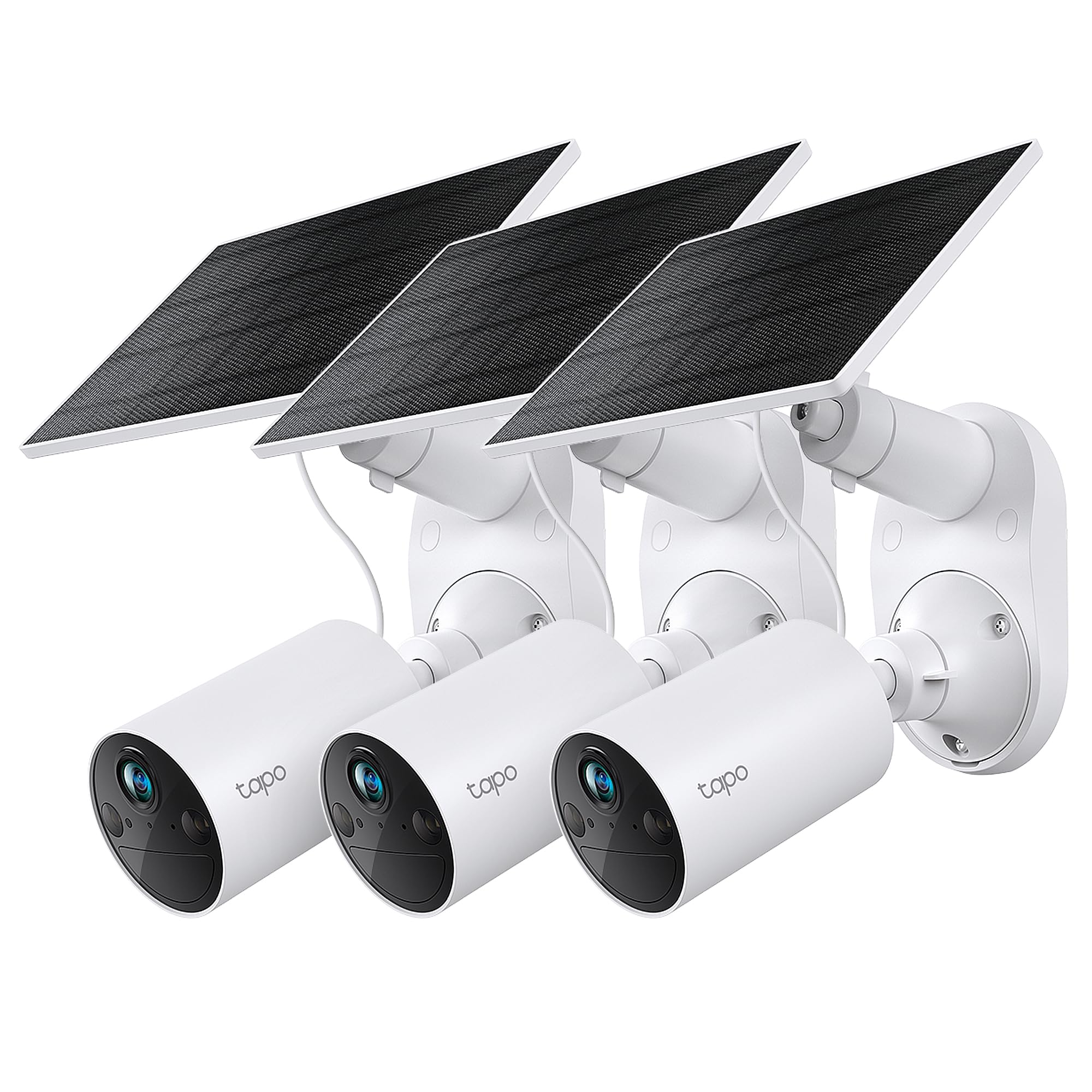
Read Amazon ReviewsTapo SolarCam C402 Kit
Choose the T110 for contact monitoring and simple opening-based automations.
The C402 Kit is a better fit when you need outdoor video coverage and detection across camera views; it serves a different security role and does not replace a contact sensor.
- The Tapo SolarCam C402 Kit is a three-camera outdoor system with 1080p video, solar charging, person and motion detection, and local microSD or optional cloud storage.
- The Tapo T110 monitors whether an item is open or closed, then can send a phone alert or trigger Tapo Smart Actions through a required H100 hub.
Is Tapo T110 Sensor Worth It?
The Tapo T110 Door Sensor Mini is worth considering for households that already use Tapo or are comfortable adding the required H100 hub.
Its broad placement options, phone alerts, Smart Actions, and included battery make it a useful compact contact sensor for everyday monitoring.
Plan for the hub and Wi-Fi requirements before purchase, and treat the up-to-two-year battery estimate as dependent on relatively light triggering. If you need a standalone sensor, this model is not the right fit.
Your review at a glance
700+ ratings
Read Amazon ReviewsTapo T110 Door Sensor Mini
A practical fit for Tapo households that want simple open-and-close alerts and automations, provided they already have or plan to add a compatible hub.
- Requires a Tapo Hub H100, sold separately, and a secured 2.4 GHz Wi-Fi network for the hub.
- Communicates with the hub using a Sub-1G low-power wireless protocol.
- Allows a contact gap of up to 15 mm.
- Monitors doors, windows, cabinets, fridges, mailboxes, and other openable items.